
Clinician library
What is Feelpath?
Feelpath is an Emotion Learning Platform for therapists and their clients, where real session language becomes shared learning material. In session and between sessions, it helps clients build usable emotion language and makes small, capacity-based shifts visible across weeks.
A common session pattern
A vignette from session
You start noticing a pattern with a client: the client shows up, they care about their sessions, they’re trying, but when the conversation turns inward, the words shut down or get muddled.
What you notice in your client
They can describe events in detail, but when you ask “what was that like for you?” they go quiet, shrug, or say “I don’t know.”
Sometimes the only thing available is a body report—stress, tightness, numbness— without a clear label for what it means.
You also notice the client may jump quickly to problem-solving, facts, or jokes, not because they’re avoiding on purpose, but because that’s where language still works.
Over time, this can create a specific kind of stuckness: we can’t reliably reach the part of the work that creates change—felt meaning, need, values, fear, longing, grief—whatever is actually organizing the symptoms. We leave without traction: no shared language, no meaningful progress.
What might be happening
There’s a name for one common version of this pattern: alexithymia.
In the classic framing, alexithymia includes difficulty identifying feelings, difficulty describing feelings, and a tendency toward externally oriented thinking.
It can show up across diagnoses and histories, and it can be shaped by neurodivergence, trauma, development, and stress.
Clinically, it is often more useful to frame this as an access condition than as “resistance.” Internal signal may be strong, but the client can’t reliably sort it into a clear feeling category and put it into words under time pressure.
The care implication is straightforward: reduce the burden of generating the “right” word, support recognition and differentiation, and build a steady, non-shaming practice of linking cue → feeling → meaning → need in practice.
Further reading: Learn more about Alexithymia, A Clinician’s Guide to Noticing Alexithymia
How Feelpath Supports Emotion Work
When emotion words are hard to access, therapy can lose traction even when both people are engaged. Feelpath helps keep the work moving by turning session language into concrete, revisitable material you can work with together.
This structure makes emotional capacity changes easier to notice and easier to build on. Early wins often aren’t dramatic insights. They are small shifts in access and tolerance: staying with experience a few seconds longer, noticing earlier, moving from global states (“fine,” “bad”) to something more specific, and finding a workable link between body cues and meaning.
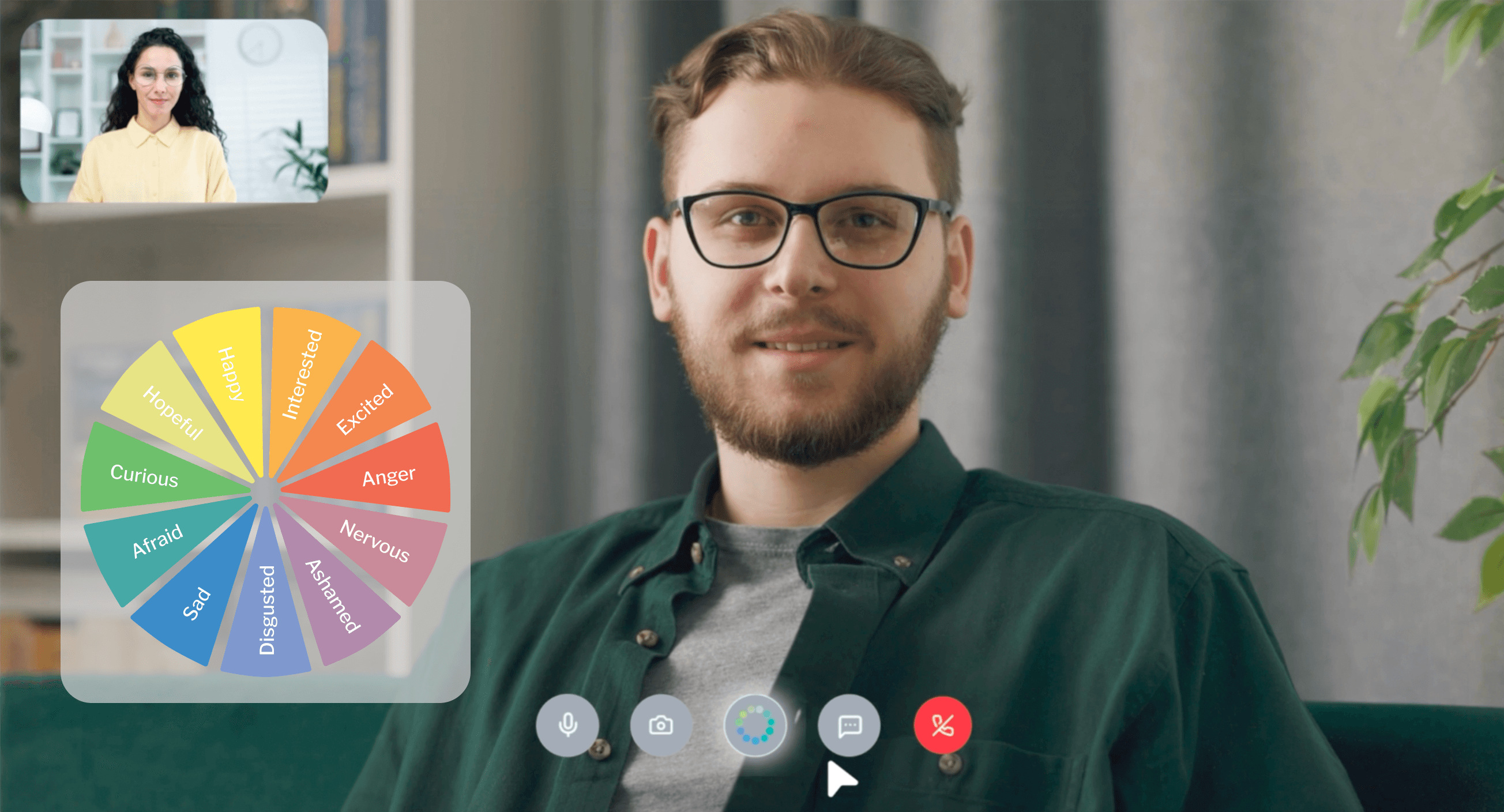
In session, Feelpath's emotion wheels reduce pressure to produce the right word on demand. Recognition is easier than generation. The wheel supports differentiation while you stay attuned, helping clients build reusable mental pathways from cue → feeling → meaning → need.
Between sessions, clients can work directly with their own session material: review what was expressed, explore what may have gone unexpressed, annotate emotions in context, and return with clearer language for the next conversation. From session to session, those interactions make small progress signals easier to see: more differentiation, steadier tolerance, shorter recovery time from difficult feelings, and more choice under stress.
Further reading: Why we designed Feelpath for clinicians, What therapists mean by progress
At a glance
How Feelpath works
Start a session
Use Feelpath for telehealth sessions. Clients can join from their browser. The goal is a normal session, with better support when emotion words are hard to access.
Use wheels when helpful
In session, emotion wheels work like a visual menu. Recognition is easier than generation. Clients can point, refine, and move toward specificity at their pace.
Revisit and reflect
After session, clients can revisit excerpts, review expressed and possible unexpressed emotions, and annotate moments for clearer language. Over time, patterns are easier to carry into the next session.
For therapists and for clients
For therapists
Run sessions normally, then review what mattered in minutes.
- In-session language support
- After-session review
- Patterns over time
- Export/share with consent
For clients
A calm structure for noticing, naming, and reflecting.
- In-session emotion wheels when language goes quiet
- Session review with expressed and possible unexpressed emotions
- Emotion annotation on real excerpts
- Emotion patterns over time to bring into next sessions
How Feelpath can help
Why therapists choose Feelpath
Designed to support presence, engagement, and long-arc emotion work without turning therapy into a performance.
Presence
A calm, structured in-session experience. Wheels are there when needed, without competing with attunement.
Engagement
Clients participate more actively when they can recognize and point to language, instead of having to produce the right word on demand.
Progression and recall
Transcript-grounded review and progress signals make it easier to revisit what mattered and see small shifts across weeks.
Safety
Designed for sensitive work. The stance is non-shaming, collaborative, and grounded in clinician judgment.
Who this is for
Feelpath is a strong fit when emotion language is the bottleneck: the internal signal is there, but words are not reliably available in the moment.
- “How did that feel?” reliably produces “I don’t know,” blankness, irritation, or shutdown.
- Emotion labels stay global (“fine,” “stressed,” “off,” “tired”) even when the narrative is detailed.
- Body cues are present, but linking cues → feelings → needs takes time and external structure.
- The client oscillates between numbness and overwhelm, and language comes online late.
- Progress shows up as small capacity gains—more precision, earlier, with less effort—and is easy to miss between weeks.
This can show up in alexithymia, trauma-related flooding or shutdown, somatic-first presentations, and many other clinical pictures. A useful frame is often a skills and access constraint, not unwillingness.
If you want a deeper read, these are good starting points:
Guided walkthrough
What your clients see
Clients can revisit real session moments, refine emotion language in context, and notice patterns over time.
In practice
Progress becomes visible
Feelpath is designed to support reflection and progress visibility across weeks by making small shifts easier to notice and talk about.
One common signal for growth is more differentiated emotion words showing up over time.
Over time
More differentiated emotion words
With Feelpath you'll be able to see vocabulary grow, when emotion language becomes more specific and usable across sessions.
Selected references
- Rauch et al. (1996). PTSD symptom provocation with PET. Reduced activation in left inferior frontal cortex during traumatic scripts. Link.
- Simoncini et al. (2024). Assessing alexithymia with spheric videos (perspective). Link.
- Kircanski, Lieberman, and Craske (2012). Feelings into words. Affect labeling during exposure. Link.
- Kashdan, Barrett, and McKnight (2015). Unpacking emotion differentiation (emotional granularity). Link.
Want to see if this fits your clients?
We will keep it practical. Fit, what you would do with one client, and where value shows up fastest.