
The thesis
Therapy moves when experience becomes workable. For many clients, that begins with language: being able to notice what is happening inside, name it with a word that fits, and hold it long enough to reflect on it with another person.
When the best available words are “fine,” “stressed,” or “I don’t know,” the work can still be real—but it’s harder to see week-to-week change. It’s harder to choose interventions with confidence. And progress can be easy to miss because it often shows up as subtle capacity gains: a little more precision, a little earlier, with a little less effort.
Feelpath is designed to support that kind of work. With consent, it preserves what was actually said in session, and it provides simple tools that help therapists and clients return to the language of the work—without turning therapy into homework, paperwork, or a score.
One concrete example is emotion vocabulary patterns over time: with consent, Feelpath can count emotion words in session transcripts and show simple trends. Not as a grade. Not as a diagnosis. Just as a clinician-controlled way to make small shifts easier to see.
Why emotion words matter
Many clients experience emotion first as body cues: tightness, heat, heaviness, restlessness, shutdown. Those sensations are real. But without words, it can be hard to understand what they mean, what they’re asking for, or what kind of support would actually help.
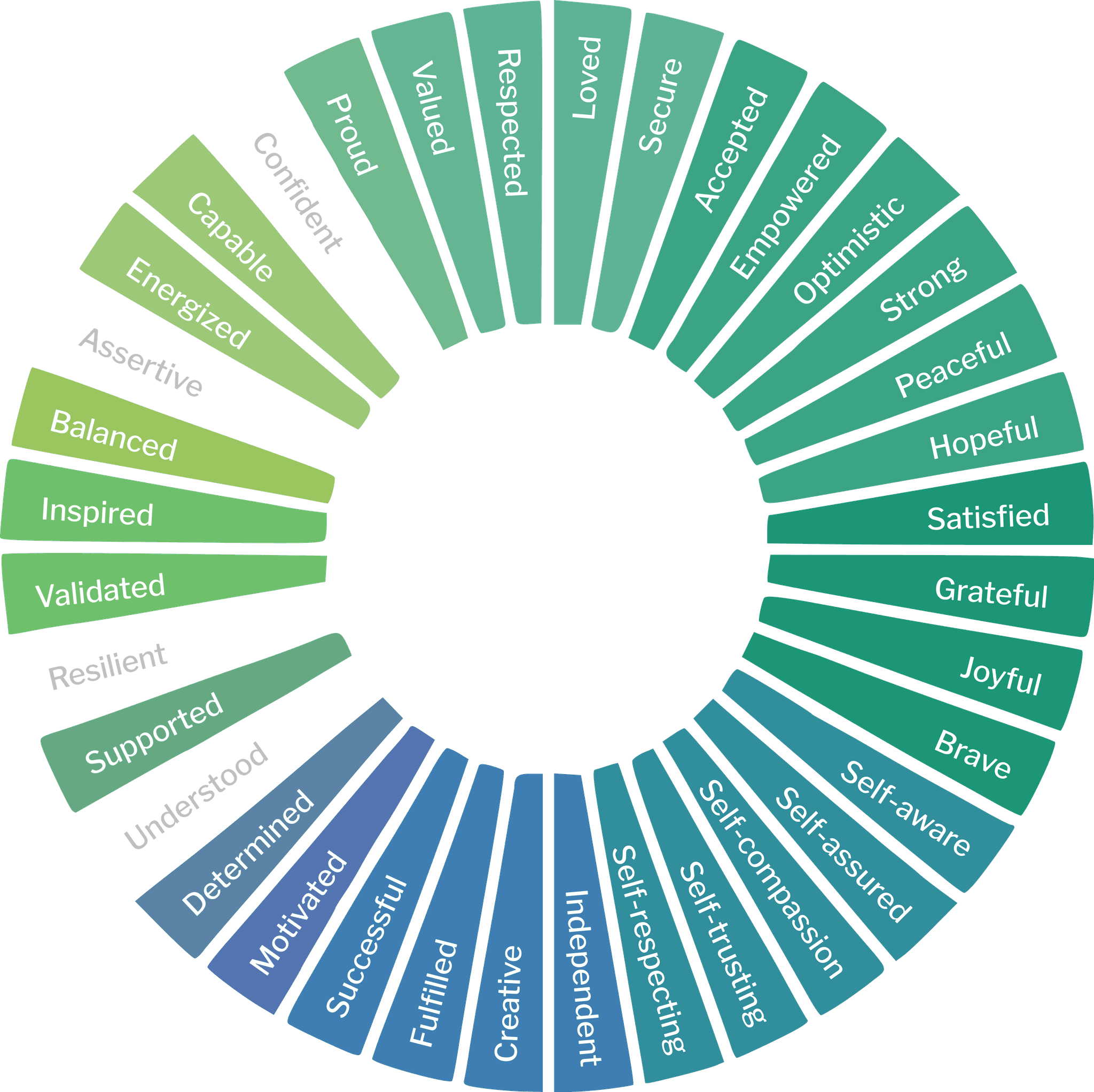
The right word can be surprisingly stabilizing. It can reduce shame (“this makes sense”). It can create distinction (“this is fear, not anger”). And it can make the next step clearer (“if this is dread, what would help me feel safer?”).
In clinical terms, this is not a personality flaw. It’s often a capacity issue. Emotion vocabulary is learnable, and progress often looks like: more specific emotion words, more often, with less effort.
The developmental journey of emotion skills
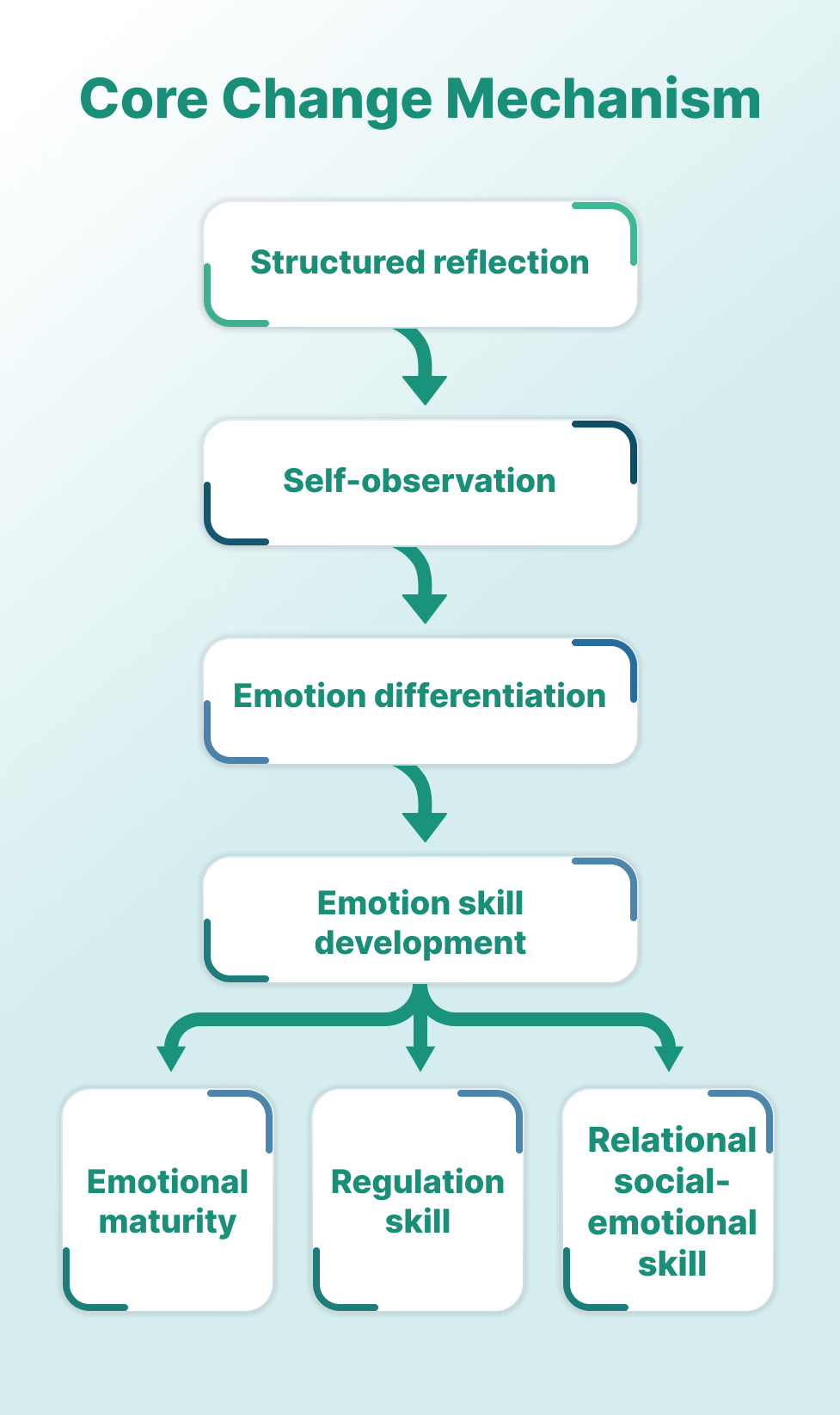
Alexithymia is often the first bottleneck: access to emotion words. But it’s only the beginning. Once that access starts to develop, there are many more emotion skills that continue to mature over time—tolerance, flexibility, beliefs about emotions, communication, repair, and meaning-making.
One way to hold the clinical logic is simple: if you don’t know how you feel, it’s hard to know what you want. If you don’t know what you want, it’s hard to know how to act.
Feelpath was designed for this kind of development. The therapist drives it. We simply help document the journey so progress is easier to notice and easier to return to.
The founder story (why this needed to exist)
For years, I lived with alexithymia without having the word for it. Most of my inner life registered as body contractions and “stress.” I could describe events clearly. I could explain thoughts. But when a therapist asked what I felt, I often could not name it in the moment.
It had real costs: relationships, anxiety and depression, and therapy friction. Not because I didn’t care. The words just were not there yet.
The turning point was not a clever insight. It was the steadiness and empathy of my therapist. We slowed down. We stayed close to what my body was doing. And over time, we began to name what was there: fear, shame, dread, grief—core feelings I could not reliably recognize on my own.
When those words started to come online, it changed what was possible. The work stopped being “something is wrong” and started becoming “this is what’s here, and we can work with it.”
Then I tried to carry that work outside the room. And I realized how hard it is to do alone without tools. Not because people aren’t trying, but because the work is subtle, repetitive, and easy to lose between sessions. That is the inspiration for Feelpath: support the clinical process of building emotion language and progress visibility, in a way that respects consent and protects the therapy hour.
The workflow reality (and what tends to fall through the cracks)
Most clinicians already have a clear workflow: intake and formulation, a treatment plan, sessions, and progress notes. Those notes are necessarily brief. Time is limited. The work is complex.
The problem we’re addressing is not “therapists aren’t doing enough.” It’s that some of the most important progress—especially for alexithymia and low emotional clarity—is capacity-based and easy to miss when you have to rely on memory alone.
- Engagement: clients often leave session with a felt shift, but without language to carry it. Between sessions, that shift can fade.
- Progress visibility: early gains can look like small changes in words—less “I don’t know,” more precision, quicker access, clearer links between body cues and meaning.
- Recall: the exact moments that mattered are hard to hold across weeks, especially across multiple clients.
Feelpath is designed to make those parts easier—not by turning therapy into measurement, but by making the work more revisit-able when it helps.
What Feelpath adds (three buckets)
1) In-session language bridge
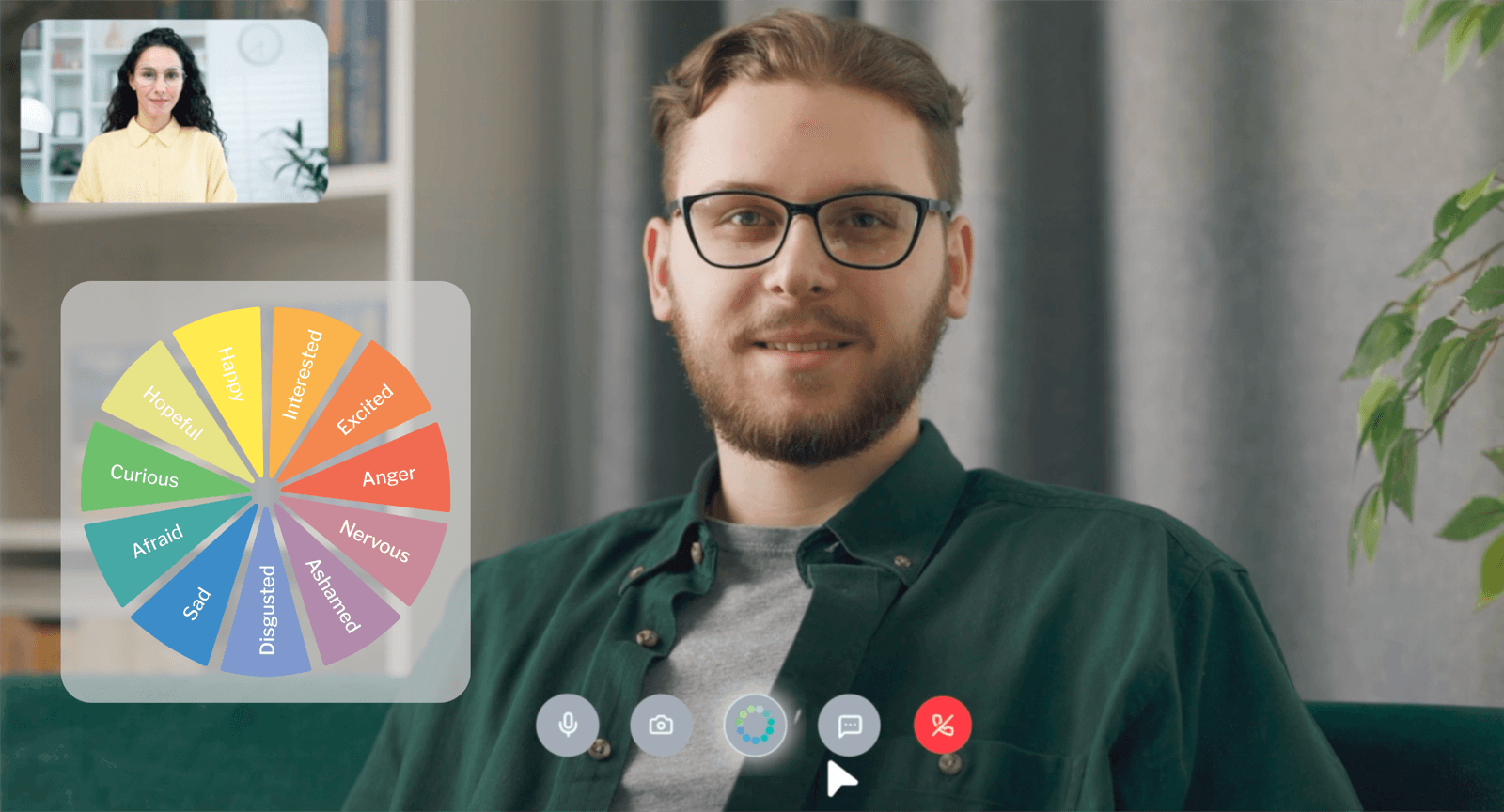
Tools like emotion wheels can help clients find words without feeling tested. They can be used lightly, when helpful, and ignored when not.
2) After-session recall and follow-up planning (consent-based)
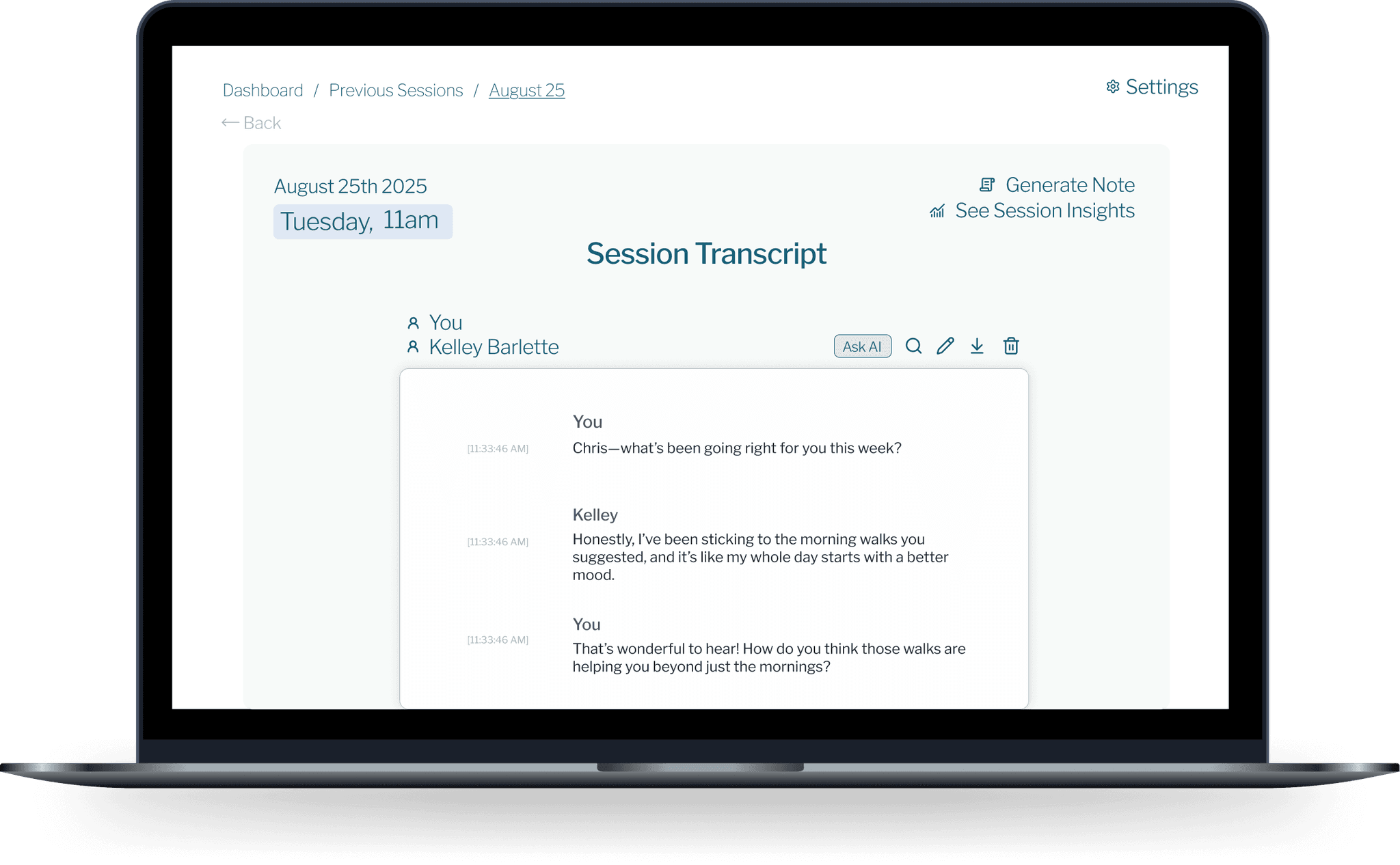
With consent, Feelpath can save a transcript so you can return to what was actually said. That supports clearer recall and better follow-up planning, with less guessing and fewer missed threads.
3) Progress visibility over time (clinician-controlled)
With consent, Feelpath can summarize emotion language in a structured way. That includes counting emotion words and showing simple patterns over time—so subtle gains don’t disappear.
This is not a scoreboard. It does not tell you what a person feels. It is a way to return to the work together, grounded in the words that were actually said.
Summary
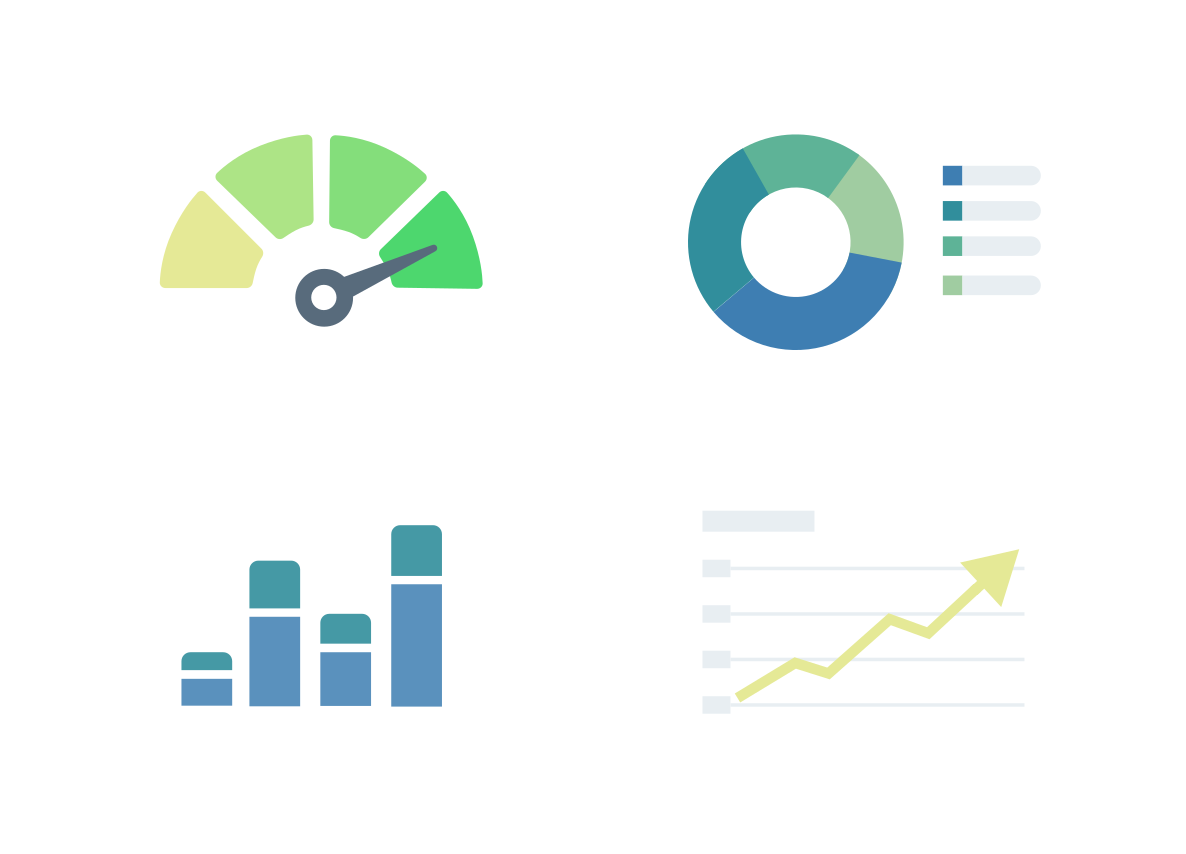
Emotion vocabulary analytics is a gentle way to notice the language you use for your feelings. Over 10 sessions, you’ve named 28 different feelings, with 2 new this week. Your current mix leans slightly toward pleasant feelings—about 1.5…
Cumulative Unique Words
Positivity Ratio
Emotional Range (per month)
Consent is the condition that makes this usable
In therapy, privacy is not a feature. It is the condition that makes the work possible. Feelpath is designed so “no” is a stable option: keeping Insights off is valid, and consent can be revisited.
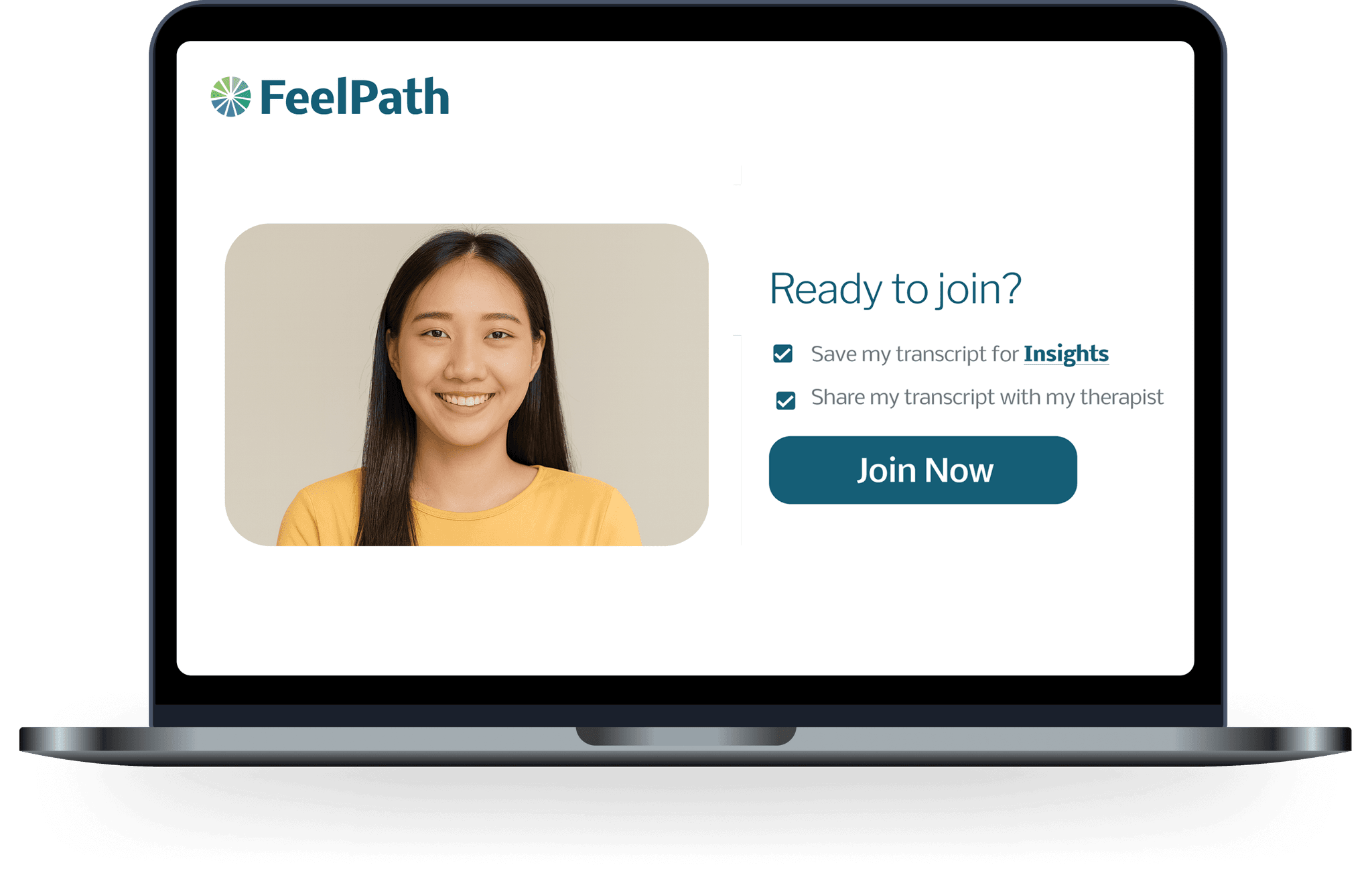
If you want the concrete details, these pages are the canonical references: What does consent mean in Feelpath, Feelpath's data handling practices, and Addressing client concerns about consent, transcripts, and AI.
Boundaries
- Feelpath is not a diagnostic tool and does not replace clinical judgment.
- It does not replace crisis protocols or risk assessment. In a crisis, use your established clinical process.
- Progress visibility is not the same as outcomes. We only describe what is actually observed, with links to the supporting excerpts.
What to do next
If you want to see whether this fits your clients, the smallest next step is a short walkthrough.