
The stance
Many clients have valid concerns about consent, recording, transcription, and AI. In a therapy context, the goal is not persuasion. The goal is trust: clear options, clear boundaries, and a way for the client to decline without it becoming a problem.
The simplest option
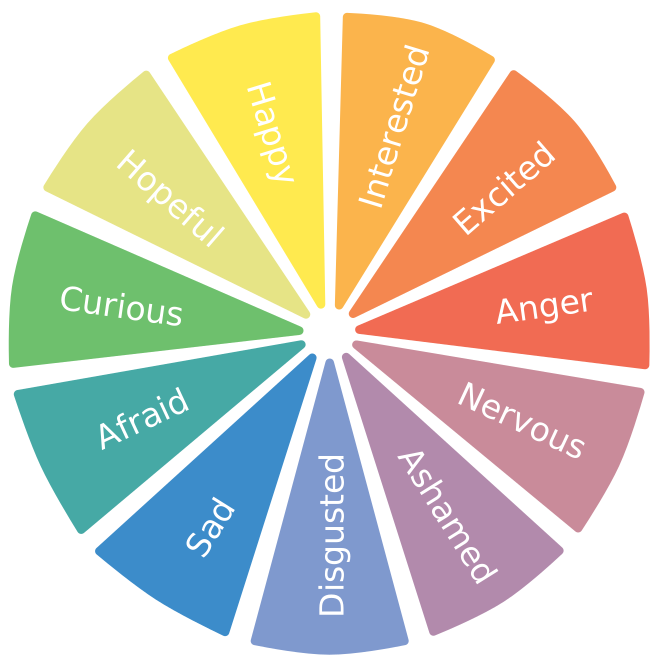
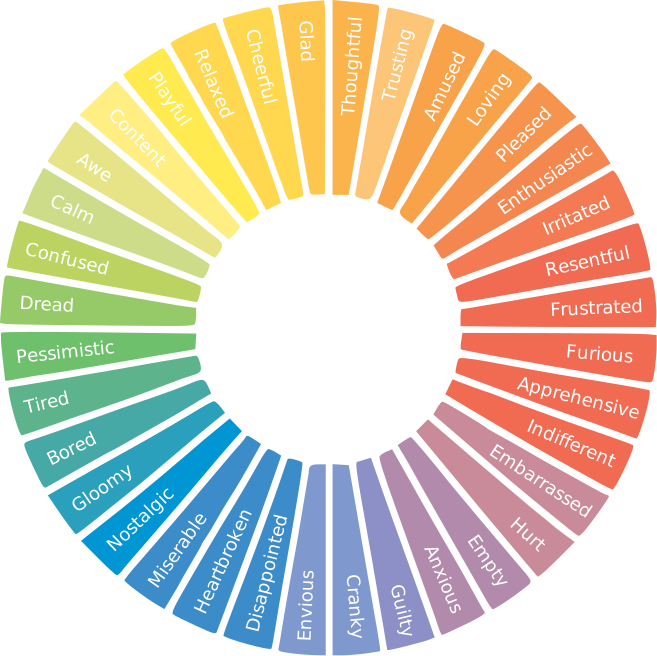
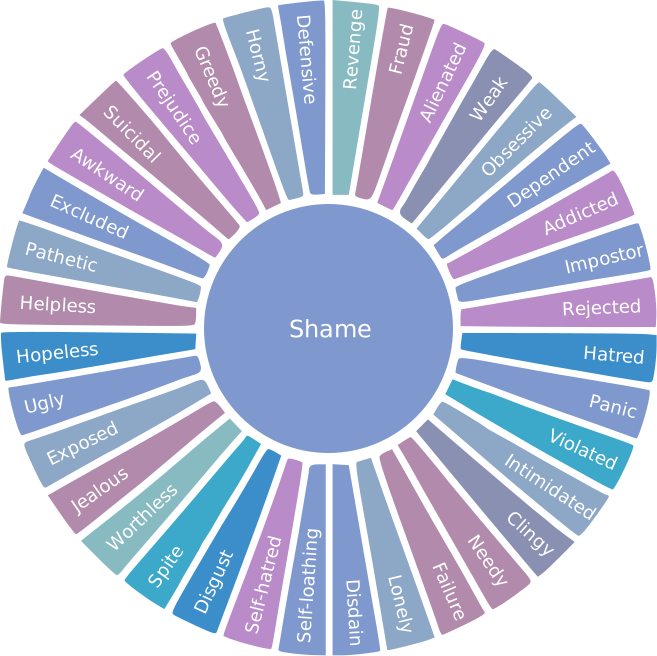
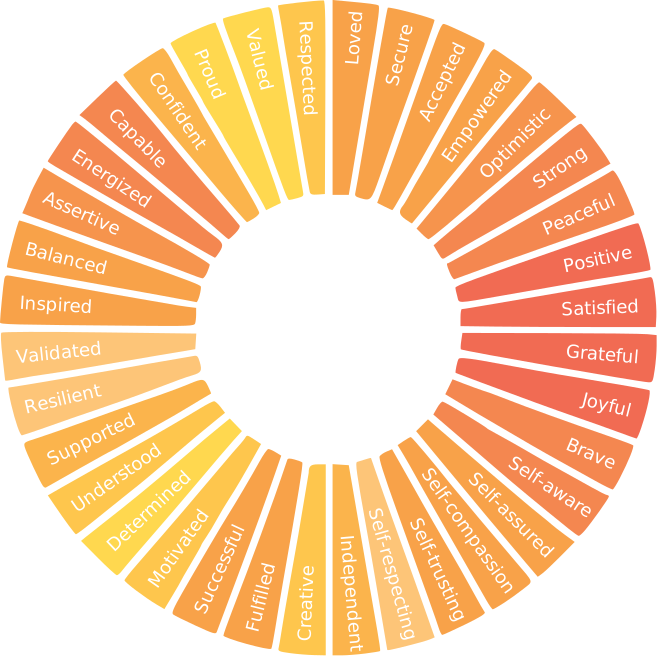
If a client does not want transcripts or AI, Feelpath can still be used as a clean, HD video therapy room with in-session emotion wheels. This lets clients access emotion language support in real time without enabling any transcript-based reflection features.
In many cases, this is the best first step. If the client later wants stronger recall and follow-up support, transcript tools can be discussed again with consent.
A consent frame that keeps trust central
Before getting into details, it helps to offer a short, stable frame that communicates autonomy and control:
- Transcripts and Insights are available when you want them. Video sessions can proceed without them.
- Consent is specific. It can be revisited. A client can say no today and yes later, or the reverse.
- Each person controls their own words. If something is wrong or too sensitive, it can be edited, redacted, or deleted by the person who said it.
- The clinical relationship stays central. Tools support reflection, recall, and follow-up planning, with clear consent and control.
A 30-second script you can reuse
What to say: “We can use Feelpath as our video room. There are transcript-based reflection notes called Insights. They’re meant to help with recall and follow-up planning, not diagnosis. If you don’t want transcripts or Insights, you can keep Insights off. That is totally fine.”
If the client is curious but cautious, you can offer a small, reversible trial: one session, then decide again.
Common concerns and clinician-friendly language
Concern: “I don’t want our sessions recorded or transcribed.”
What to say: “That’s completely okay. You can use Feelpath with Insights off and still use emotion wheels in session, or you can use another video platform. The reflection tools are there if you want them. Your preference matters.”
What to do: Offer a clear fork in the road: Feelpath with Insights off, or a different video platform. Avoid framing the decline as a barrier to care.
Concern: “AI feels creepy.”
What to say: “That reaction makes sense. In therapy, anything that risks trust is worth taking seriously. If you prefer, we can keep this strictly human and use no transcript tools at all.”
What to do: Normalize the concern and clarify that the client can opt out without consequences. If the client is open, offer a small, reversible trial with a single session rather than a blanket commitment.
Concern: “Who can see this?”
What to say: “Only the people you choose. Sharing is always your choice. It can stay strictly between us, or you can keep Insights off.”
What to do: Keep the explanation concrete. Avoid long technical detail. Offer a link to your practice’s privacy language and Feelpath’s privacy overview if helpful.
Concern: “What if the transcript is wrong?”
What to say: “That’s a reasonable concern. It’s wise to expect some inaccuracies unless we’re reviewing everything. The purpose is recall and reflection, not truth. If anything is wrong or sensitive, it can be corrected or removed.”
What to do: Reinforce the hierarchy: lived experience and clinical judgment come first; the transcript is a support tool.
Concern: “Will this replace therapy or judge me?”
What to say: “No. It does not replace therapy or clinical judgment. It can help us remember what we worked on, notice patterns over time, and build clearer language for feelings. You’re always in control of what we use.”
When a simpler platform is enough
If a client does not want transcripts, AI, or reflection tools, and the client is making steady progress with standard care, a simpler video platform is often sufficient. In that situation, using Feelpath with Insights off is a choice. The deciding factor is whether the tools are adding clinical value without harming trust.
The stakes, stated plainly
For clients with alexithymia or low emotional clarity, therapy can stall when internal signals cannot be named, differentiated, or revisited between sessions. The practical risk is not a catastrophe. The risk is slow progress, repeated loops, and missed early gains because change tends to be subtle and capacity-based.
The goal is to keep progress visible. If transcript tools are not a fit, the same clinical intent can be supported with non-tech tools.
Free tools that do not require transcripts or AI
These can be used in any modality, with any video platform, and printed if needed.
Printable emotion wheels
- Core emotions wheel
- Primary emotions wheel
- Expression-resistant feelings wheel
- Positive self-regard wheel
A simple tracking spreadsheet
A basic tracker can make capacity-based progress easier to notice. Download and use it in any spreadsheet tool:
If transcripts are off the table, what still helps
Even without transcripts or AI, the same clinical targets remain: increasing specificity, improving differentiation, linking cues to context, and building language for needs and boundaries. If the client is open, tools like emotion wheels and lightweight tracking can support recall and progress visibility without adding pressure or a sense of evaluation.
Further reading: What does consent mean in Feelpath, and Feelpath's data handling practices, plus Privacy overview.