
Progress is possible and often easier than it looks
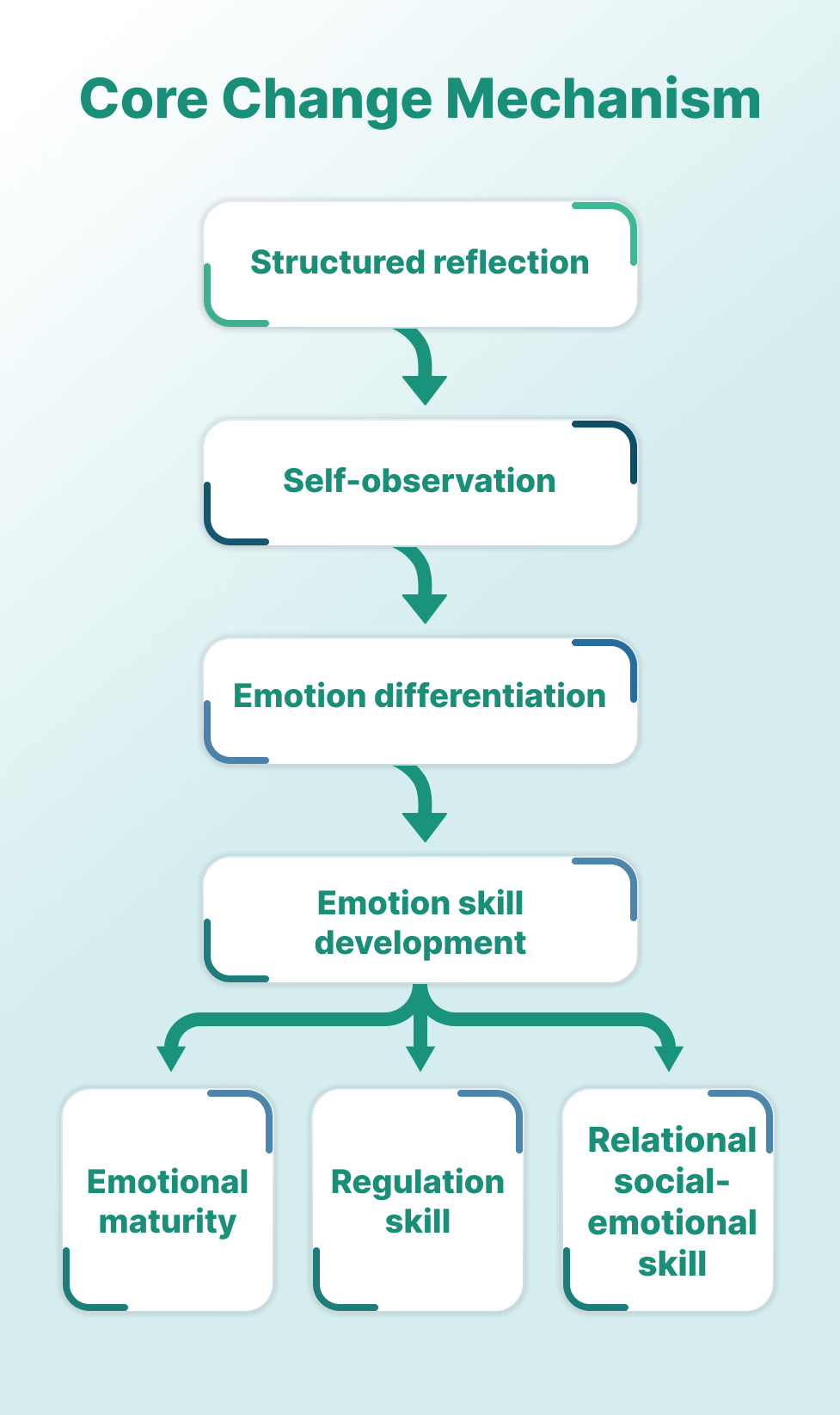
Alexithymia is commonly treated as a stable trait, but clinically it often behaves more like a set of modifiable capacities: noticing internal cues, differentiating feeling states, finding workable words, and translating internal signals into meaning, needs, and choices. When these capacities strengthen, therapy usually becomes less circular and more efficient.
One reason progress can be underestimated is that it rarely looks like dramatic emotional catharsis. Instead, progress tends to show up as better access, better differentiation, and earlier detection.
What progress looks like
Progress in alexithymia-focused work often looks like capacity, not big emotional speeches:
- From global to specific: “bad/off” becomes “anxious,” “sad,” “resentful,” “ashamed,” “relieved.”
- From body-only to body + meaning: “tight chest” becomes “tight chest when anticipating criticism.”
- Differentiation: tension vs fear, fatigue vs shutdown, sadness vs emptiness, anger vs hurt.
- Earlier detection: noticing the shift at a 3/10 instead of a 9/10.
- Tolerance: staying present with sensation/emotion long enough to explore it.
- Needs and boundaries language: “I need reassurance / space / a clearer ask,” rather than only symptoms.
- Progress over weeks: a repeating pattern becomes visible and changes contextually, rather than restarting each session.
A useful shorthand is: better differentiation—for example, “tension + urge to withdraw = maybe shame,” versus everything collapsing into “bad/tired.”
Why clinicians miss progress
Alexithymia-related gains are easy to miss if progress is tracked only by insight, expressiveness, or narrative coherence. Many clients improve first in micro-skills: fewer “I don’t know” moments, faster access to a small set of labels, and clearer links between cues and contexts. When those micro-skills are noticed and reflected back, they often accelerate.
How Feelpath supports a positive feedback loop
Progress accelerates when change is easier to notice, easier to name, and easier to revisit. That creates a positive loop:
- Notice: the client sees a concrete shift, such as “I used a specific word faster this week.”
- Reinforce: the shift is reflected back as a skill, such as “that’s differentiation; that’s access.”
- Repeat: the client is more willing to try again because the change feels real and measurable.
Feelpath is designed to make this loop easier by grounding reflection in what was actually said, and by showing patterns over time in a low-pressure way.
Tools by stage: what helps when
Different tools support different phases of change. A simple way to think about it is: access → differentiation → meaning/needs → consolidation.
Stage 1: Access
The goal is to find any workable words without pressure.
- Smart Emotion Wheels: a recognition-first word menu for choosing words without pressure or jargon.
- Real-time Emotion Suggestions: candidates during reflection and review when the client goes blank.
- Guided meditations: short practices that help clients slow down and tune into internal cues.
Stage 2: Differentiation
The goal is to sort similar states and build clearer labels over time.
- Emotion Annotation: lightweight highlights that connect language to feelings and themes over time.
- Session Review: a recap of key moments so the client can revisit what mattered between sessions.
- Self-Talk Analysis: noticing inner narratives that maintain confusion, shame, or shutdown.
Stage 3: Meaning, needs, and choices
The goal is to make the internal signal usable in daily life and relationships.
- Transcript-grounded session review: revisit emotion work and key excerpts without extra note-taking. This is clinician-facing.
- Evidence-linked insights: inspect themes and follow-ups by jumping to the supporting excerpt. This is clinician-facing.
- Between-session supports: offer opt-in reflection and education without assigning homework. These are clinician-controlled.
Stage 4: Consolidation
The goal is to keep progress visible and reinforce it over weeks.
- Emotional Vocabulary Analytics: a gentle view of emotion-word patterns that makes growth easier to notice.
- Patterns over time: track shifts across sessions so small gains don’t get lost. This is clinician-facing.
- Consent-first controls: pause/exclude and permissions that keep trust central as data and reflection tools are used. This is clinician-facing.
Measuring progress without overclaiming
Measurement is most useful when it stays close to observable behavior: language, timing, and patterns across sessions. Two categories are especially practical:
- In-session markers: fewer “I don’t know” moments, faster access to words, and clearer differentiation.
- Across-session markers: increasing specificity over time and better linkage between cues, contexts, and needs.
How ALI fits in
Feelpath’s ALI: Alexithymia Language Index is designed to complement—not replace—clinical judgment and validated self-report. It provides a conversation-derived view of common alexithymia components, including difficulty identifying feelings, difficulty describing feelings, and externally oriented talk. Each signal is tied back to excerpts so the evidence can be checked.
Practically, ALI can help clinicians notice trends like increases in specific emotion words, decreases in “I don’t know what I feel” language, and fewer body-cue-only mentions that are not linked to feelings or needs.
Bottom line
Alexithymia-focused progress is real and clinically meaningful. When progress is defined as capacity—access, differentiation, meaning-making, and consolidation—small gains become visible earlier, and earlier visibility often accelerates change.